Garden Clearance in Haringey
Garden clearance in Haringey should leave outdoor space tidy, usable and ready for the next stage, whether that means a simple seasonal tidy-up or a fuller removal of cuttings, broken items and general green waste. We provide a practical service focused on clearing away unwanted material from gardens, yards and outside storage areas, with work planned around access, item type and the amount to be taken away. The aim is straightforward: remove the clutter, separate what can be handled sensibly and leave the site neat.
Our garden clearance service can include the loading and removal of soil, branches, hedge trimmings, old plant pots, broken garden furniture and other outdoor debris. Where items need sorting, we work methodically rather than rushing the process. That matters because some clearances are mainly green waste, while others involve mixed materials that need a little more attention before they are taken away. Clear communication at the outset helps the work go smoothly and keeps the visit focused on the right tasks.
For many customers, the main decision is how much of the outdoor area should be cleared in one visit and whether any items are to be kept aside for reuse, donation or separate disposal. If you are planning a larger tidy-up, it is helpful to think about pathways, sheds, borders and hard-to-reach corners as well as the obvious piles of waste. Tell us what needs removing, and we can build the clearance around that scope rather than forcing a one-size-fits-all approach.
Garden waste and outdoor rubbish removal
Garden waste and outdoor rubbish removal is often the most visible part of the job, but it is not always the simplest. A pile of prunings may sit alongside old bags, cracked containers, worn-out tools or timber offcuts, and each material may need handling slightly differently. We remove the items that are ready to go, stack and lift them safely, and keep the work organised so the area can be used again without leftover debris underfoot.
Because every outside space is arranged differently, the clearance can be shaped around access as well as volume. Some gardens have narrow side paths, steps or awkward corners that affect how material is moved, while others are more open but contain a larger mix of waste. If you are preparing to request a quotation, a brief note about the garden layout and the type of waste involved is usually enough to start a sensible discussion. You can also use the contact page when you are ready to go ahead. Contact us.
We also help with recurrent outdoor accumulation, where leaves, cut grass, loose branches and household items have gathered over time and now need a proper clear-out. In these cases the work is often less about a single item type and more about restoring order to the whole space. A well-planned clearance can make later gardening, landscaping or simple maintenance easier, because the loose material has been removed rather than moved from one corner to another.
What a garden clearance can include
Garden clearance is broader than grass cuttings alone. Depending on the site, it may involve lifting and taking away compost bags, rotten timber, damaged planters, broken garden ornaments and other outdoor waste that has built up around the space. We can also deal with old furniture that is no longer fit for use in the garden, provided it is part of the agreed clearance. The benefit of this approach is that you are not left trying to sort several small disposal problems separately.
Not every item in a garden is suitable for the same handling method, so we work with the material in front of us rather than assuming it all belongs in one pile. Heavier items may need careful carrying, while lighter waste can often be bundled and removed more quickly. If you are comparing options, look at how much of the work is included: some jobs need only a tidy collection of green waste, while others are better described as a full outdoor clearance with mixed materials.
Where there are recyclable or re-usable elements, a measured approach can help keep the clearance efficient. Cut branches, soil and general green waste are one thing; cracked plastic, wood offcuts and rusty metal fittings are another. We handle the practical side of sorting as part of the service so the final result is not just emptier, but cleaner and more orderly. That makes the space easier to enjoy and easier to plan for next.
Choosing the right clearance for your outdoor space
Some customers need a light clearance after pruning or seasonal gardening, while others want a more complete removal of neglected material. The right service depends on the condition of the space and the mix of items present. If you only need the borders and path edges cleared, the work will be quite different from a garden that contains stacked waste, old fixtures and several categories of refuse. A clear description at the start helps define the job properly.
We can shape the work to suit different levels of tidying, from a focused collection of cuttings to a more detailed uplift of garden rubbish and unwanted outdoor objects. When you ask for a quotation, it is useful to mention whether the garden is easy to access, whether items are spread across several areas, and whether anything should be left untouched. That gives a more accurate basis for planning and avoids guesswork when the work begins.
Garden clearances also vary by finish. Some customers want the area swept through and left ready for further gardening, while others are mainly concerned with removing bulky waste that is blocking use of the space. We aim to match the clearance to the intended outcome so you are not paying for unnecessary handling. Ask for a quotation when you have a clear idea of the scope, and we can discuss the practical details with you.
How we manage mixed outdoor waste
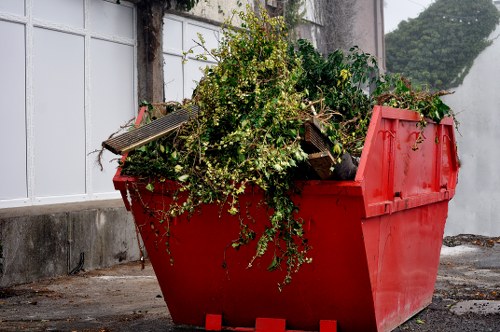
Mixed outdoor waste needs a steadier approach than a simple pile of leaves. A single garden may contain soil, turf, broken pots, packaging, timber, old toys, damaged furniture and green waste all in one place. Rather than treating it as one undifferentiated mass, we work through the items in a sensible order so the load is manageable and the useful sorting decisions are made at the right stage. That keeps the job efficient and reduces unnecessary handling.
There are practical reasons for separating materials before removal. Heavier waste can affect loading, sharp or awkward items need attention, and green waste is often best kept distinct from other rubbish. A good clearance therefore depends on judgement as much as lifting power. If the garden includes a shed area, side passage or hidden storage corner, those places are worth mentioning because they often contain the extra pieces that make a job more complex than it first appears.
We also take account of the sequence of work. Clearing a garden may start with the obvious material, but it often ends with smaller debris that has become visible only once the bulk has gone. This final stage matters because it is where the difference between a partially cleared garden and a properly cleared one becomes clear. Orderly removal helps achieve that finished result without unnecessary repetition or confusion.
Outdoor clearances for homes and flats
Garden clearance is not limited to traditional houses with large back gardens. It may also be needed for communal outdoor areas, courtyards, terraces, paved yards or compact spaces attached to flats and maisonettes. The principle is the same: remove the unwanted material safely and leave the area in a better state. In smaller or shared settings, the emphasis is often on careful handling, considerate access and making sure the clearance fits the property layout.
Where outdoor space is shared or partly enclosed, the work usually needs a little more attention to access points and circulation. That is especially true if items have to pass through communal routes or if the clearance is taking place close to planting, fencing or fixed features. If this is part of a broader property tidy-up, it can be useful to combine the garden work with other clearance needs so the overall job is completed in a single planned visit rather than in fragments.
For customers who are deciding whether to clear everything at once or divide the task, the main question is often what will make the outdoor area easier to use straight away. Clearing only the obvious waste may help, but a more thorough service can be the better choice where the space has become cluttered over time. Pricing and quotes gives a useful starting point when you are ready to compare the likely scope of work.
Preparing for a quotation and booking
A clear quotation begins with a clear description of the work. It helps to note what needs removing, how much of it there is, and whether the items are concentrated in one place or spread across the garden. Photographs can be useful when they are available, but they are not the only way to explain the job. A short list of the main materials, access points and any items to leave behind is often enough to start the process.
If you are arranging a visit, think about gates, paths, steps, shared access and parking, because those practical details can affect how the work is carried out. It also helps to say whether the clearance is urgent or if it can be scheduled more flexibly. You do not need to over-explain the garden; concise, relevant information is usually the best way to request a quotation that reflects the actual work needed. For a direct enquiry, our contact page is the simplest place to begin.
Once the basic details are clear, the rest of the conversation is usually about scope. That might mean deciding whether the job is a partial tidy, a mixed waste removal or a fuller garden clearance with several types of item included. Keeping the description focused on the material present makes it easier to agree the right service and helps avoid surprises later in the process.
About Haringey
Haringey is a North London borough known for its strong contrasts in landscape, architecture and urban character. It stretches from the high ground around Highgate and Muswell Hill down to the flatter, denser districts closer to Tottenham and the Lea Valley, giving the area a varied topography that is unusual within inner London. This range is visible in the streets themselves: some parts contain late Victorian and Edwardian housing on tree-lined avenues, while others are defined by larger estates, terrace rows and busy high streets. Alexandra Palace is one of the borough’s best-known landmarks, sitting prominently on the ridge with wide views across London, while Finsbury Park and the Parkland Walk provide important open spaces and walking routes. The borough also includes parts of the River Lea corridor, which links it to a wider network of waterways and former industrial land now shaped by regeneration. Haringey has long been associated with a mix of residential neighbourhoods, transport links and cultural life, with communities rooted in places such as Wood Green, Crouch End and Tottenham. That combination of historic suburbs, busy commercial centres and green corridors gives the borough a layered identity, where local streets can shift quickly from quiet residential character to active town-centre activity. It is also an area where parks, back gardens and shared outdoor spaces form an important part of everyday life, alongside libraries, venues and independent shops that contribute to each district’s distinct feel. The borough’s historic fabric includes conservation areas, church buildings, terraces and former grand suburban development, all set within a place that continues to evolve.
Waste types, garden features and site conditions

A garden clearance can be shaped by the kinds of features present in the space, not just by the amount of waste. Raised beds, sheds, old compost areas, paving, broken fencing and stacked materials all change how the job is approached. In some cases the clearance is mostly surface material; in others, the task is to open up hidden corners where clutter has gathered over time. The more accurately the site is described, the more sensible the planned work will be.
Different waste types also affect how the clearance is paced. Green waste can be bulky but light, while timber, paving fragments or worn-out garden equipment can be heavier and more awkward. Some items are best handled separately so they can be lifted and removed without causing avoidable damage to the surrounding area. That is one reason a garden clearance is not simply a question of collecting whatever is visible; it is about deciding how to clear it in a controlled and practical way.
In many cases, a measured approach is preferable to a rushed sweep-through. The goal is not merely to empty the space but to leave it workable, which means checking around paths, corners and the edges of fixed features. When the clearance is done with that level of care, the result is more useful for the next stage, whether that is planting, redesigning, or simply enjoying a tidier garden.
Garden clearances for seasonal tidy-ups and fuller projects

Some clearances are driven by the seasons, such as the removal of fallen leaves, prunings and other material left after growth has slowed or been cut back. Others are part of a more ambitious project, where the outdoor area needs a substantial clear-out before new planting or redesign work can begin. We can support both kinds of job, but the details matter: a seasonal tidy-up may be quick and focused, while a fuller clearance often requires more sorting, lifting and careful movement of mixed items.
If you are planning a broader outdoor project, it is often worth deciding which materials should be removed before the next phase starts. That may include old containers, damaged timber, broken furniture or anything else that would get in the way of reworking the space. A properly timed clearance can save frustration later, because the area is already prepared for the next step instead of being left half-finished and awkward to use.
When you are ready to take the next step, keep the request simple and specific. Say what needs clearing, what should stay, and whether there are any access issues to know about. Request a quotation when you are ready, and we can discuss the scope in clear practical terms.
From first contact to completed clearance
Once the main details are known, the rest of the process is usually straightforward. We review the scope, discuss the kind of garden waste or outdoor rubbish involved, and consider any site conditions that may affect the work. That might include the amount of material, the location of the items, or whether the clearance is part of a wider tidy-up. Clear information at this stage makes it easier to plan the practical side of the job properly.
Customers sometimes worry that a garden clearance has to be perfectly organised before they ask for help, but that is not usually the case. A rough description of the space, along with the main categories of waste, is often enough to begin. From there, the job can be shaped to match what is actually there rather than what was assumed. If you need to move from a cluttered patch of ground to a cleared and usable outdoor area, our garden clearance service is designed around that outcome.
Good clearance work should make the next decision easier, not harder. By removing unwanted items in a practical, orderly way, the space becomes easier to inspect, easier to maintain and easier to plan for future use. If your outdoor area is ready for attention, the sensible next move is to gather the basics and get in touch when you are ready.